Capture the World: Ultimate Travel Photography Tips
Embarking on a journey around the world offers an unparalleled opportunity to witness breathtaking landscapes, vibrant cultures, and unique moments. For many, the desire to immortalize these experiences through photography is as strong as the urge to explore. However, simply pointing and shooting often falls short of capturing the true essence and emotion of a place.
This comprehensive guide on travel photography tips world aims to transform your approach, helping you move beyond snapshots to create compelling visual narratives. Whether you’re a seasoned globetrotter or planning your first international adventure, these systematic steps and practical advice will equip you with the knowledge to capture stunning images that tell your story and evoke the spirit of your travels.
From understanding your equipment to mastering composition and ethical considerations, we’ll delve into the essential techniques that professional travel photographers use. Get ready to elevate your craft and bring home a gallery of truly unforgettable memories from every corner of the globe.
Understanding Your Gear: Essential Travel Photography Equipment
The right equipment can make a significant difference in the quality and versatility of your travel photos. While you don’t need the most expensive gear, understanding what each piece does and how it can benefit your journey is crucial for effective travel photography tips world.
Choosing the Right Camera Body
For travel, balance is key. You need a camera that offers excellent image quality without being overly bulky or heavy. Mirrorless cameras are often preferred by travel photographers due to their compact size, advanced features, and excellent low-light performance, making them ideal for diverse shooting conditions worldwide.
DSLRs still offer robust performance and a wide range of lenses, but their larger size can be a drawback for extensive travel. Consider your comfort level and the types of photos you primarily want to take. A camera with a good sensor and manual control options will give you the flexibility needed for various photographic scenarios.
Selecting Versatile Lenses
A good lens can be more important than the camera body itself. For travel, versatility is paramount. A standard zoom lens (e.g., 24-70mm or 24-105mm equivalent) is an excellent starting point, covering wide-angle landscapes and tighter portraits. An ultra-wide-angle lens (e.g., 16-35mm) is fantastic for grand vistas and architectural shots.
Consider adding a fast prime lens (e.g., 50mm f/1.8 or 35mm f/1.8) for low-light situations and beautiful background blur (bokeh), perfect for capturing street scenes and portraits. Avoid carrying too many lenses; select a few that cover your most common photographic needs without weighing you down excessively.
Must-Have Accessories
Beyond the camera and lenses, several accessories can significantly enhance your travel photography experience. A sturdy but lightweight tripod is essential for low-light photography, long exposures, and capturing crisp landscapes. Extra batteries are non-negotiable, as power outlets can be scarce in remote locations.
Other crucial accessories include:
Read Also : Beginner Travel Photography Tips: Capture Stunning Memories
- Multiple high-capacity SD cards: To avoid running out of storage.
- Lens cleaning kit: Dust and smudges are inevitable.
- Rain cover or waterproof bag: To protect your gear from unexpected weather.
- Portable hard drive or cloud storage subscription: For immediate photo backups.
- Power bank: To charge your phone or other small devices on the go.
These items ensure you’re prepared for almost any photographic opportunity the world throws at you.
Mastering Composition: Framing Your World Shots
Composition is the art of arranging elements within your frame to create an aesthetically pleasing and impactful image. Good composition can transform an ordinary scene into an extraordinary photograph, making it a cornerstone of effective travel photography tips world.
The Rule of Thirds and Leading Lines
The Rule of Thirds is a fundamental compositional guideline. Imagine your frame divided into nine equal sections by two horizontal and two vertical lines. Placing your subject or points of interest along these lines or at their intersections creates a more balanced and engaging image than centering everything. This simple technique adds dynamism and visual interest.
Leading lines are natural or artificial lines within a scene that draw the viewer’s eye towards your main subject or deeper into the photograph. Roads, rivers, fences, or even the gaze of a person can act as leading lines. They create a sense of depth and guide the viewer through your narrative, making the image more immersive.
Symmetry and Patterns
Symmetry often creates a sense of balance, harmony, and grandeur. Reflections in water, architectural elements, or perfectly aligned natural formations are excellent opportunities to utilize symmetry. While the Rule of Thirds suggests off-centering, sometimes a perfectly symmetrical shot is precisely what’s needed to convey a sense of order or scale.
Patterns, whether natural or man-made, also add visual appeal and rhythm to your photographs. Look for repeating shapes, colors, or textures in markets, ancient ruins, or natural landscapes. Breaking a pattern with a unique element can also create a powerful focal point and add intrigue to your composition.
Capturing Scale and Perspective
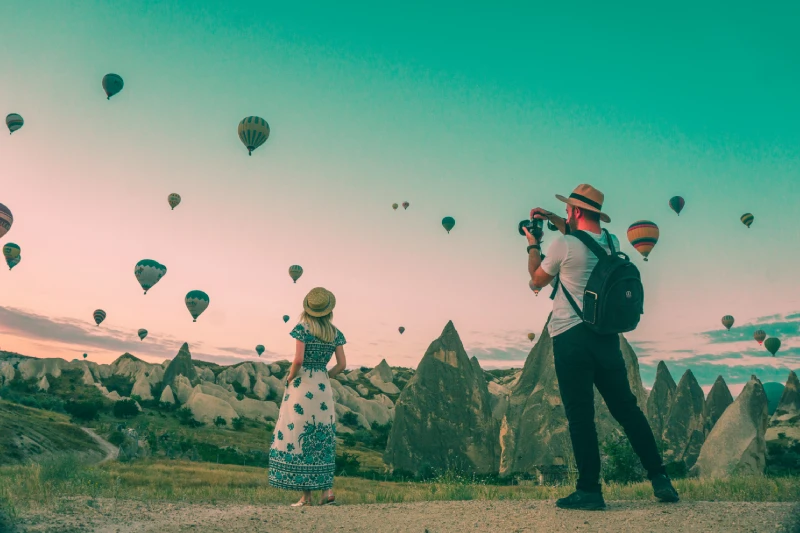
When photographing vast landscapes or monumental architecture, it’s often challenging to convey their true size. Including a human element or a familiar object within the frame can instantly provide a sense of scale. A person standing in front of a massive mountain range or a tiny boat against a huge waterfall helps viewers grasp the enormity of the scene.
Experiment with different perspectives. Don’t always shoot from eye level. Get down low for a unique ground-level view, or find higher vantage points to capture expansive scenes. Changing your perspective can reveal new details, simplify a busy background, or add a dramatic flair that makes your travel photos stand out.
Lighting the Scene: Harnessing Natural Light
Light is the essence of photography. Understanding how to work with natural light is perhaps the most crucial of all travel photography tips world, as it directly impacts the mood, clarity, and overall quality of your images. Different times of day offer dramatically different lighting conditions.
Golden Hour Magic
The period shortly after sunrise and before sunset, known as the golden hour, is revered by photographers. During this time, the sun casts a soft, warm, and diffused light that creates long, flattering shadows and vibrant colors. It’s ideal for almost any type of photography, from landscapes and cityscapes to portraits.
Read Also : Discover Instagrammable Beautiful Places Worldwide
Plan your shoots around these precious hours. Wake up early to catch the dawn light over an ancient ruin, or scout a location in the afternoon to be ready for the sunset glow. The unique quality of golden hour light can elevate your travel photos from good to truly spectacular, adding depth and a magical ambiance.
Dealing with Harsh Midday Sun
Midday sun, typically from 10 AM to 4 PM, can be challenging. It creates harsh, strong shadows and often washes out colors, especially in bright conditions. While it’s generally advisable to avoid shooting directly under the midday sun, sometimes it’s unavoidable due to travel schedules.
If you must shoot in harsh light, look for shaded areas or use natural reflectors (like light-colored walls) to soften shadows. Alternatively, use the strong contrast to your advantage by creating dramatic silhouettes. A polarizing filter can also help reduce glare and deepen colors in bright sunlight, making it a valuable tool for midday shooting.
Low Light and Night Photography
When the sun sets, a whole new world of photographic opportunities emerges. Low light and night photography require different techniques but can yield incredibly atmospheric results. A sturdy tripod is essential to prevent camera shake during long exposures.
Use a wide aperture (low f-number) and increase your ISO carefully to capture more light, being mindful of potential noise. Experiment with shutter speed to create light trails from cars or capture the soft glow of city lights. For astrophotography, seek out locations with minimal light pollution. Night photography demands patience and experimentation, but the rewards are often stunning images that truly convey the mood of the evening.
Storytelling Through Your Lens: Beyond the Postcard
True travel photography goes beyond merely documenting what you see; it’s about telling a story, conveying emotions, and capturing the spirit of a place. These travel photography tips world focus on adding depth and narrative to your visual journey.
Focusing on People and Culture
The people you meet and the cultures you encounter are integral to any travel experience. Don’t shy away from photographing locals, but always do so with respect and sensitivity. Candid shots can be powerful, capturing authentic moments of daily life, work, or celebration.
When taking portraits, try to engage with your subject. A smile, a gesture, or even a few words in their language can make a huge difference. Ask for permission when appropriate, and be prepared to show them the photo afterwards. Capturing genuine expressions and interactions adds immense depth and humanity to your travel portfolio.
Detail Shots and Macro Photography
While grand landscapes are captivating, don’t overlook the smaller details that contribute to a place’s unique character. Intricate carvings on an ancient temple, the texture of a local textile, a street vendor’s hands, or vibrant market produce can all tell a rich story. These detail shots provide context and add an intimate layer to your broader narrative.
If your lens allows, experiment with macro photography to capture extreme close-ups of flowers, insects, or tiny artifacts. These images often reveal beauty and complexity that are easily missed with the naked eye, offering a fresh perspective on your surroundings and adding variety to your photographic series.
Read Also : Best Road Trips in the World: Ultimate Guide
Documenting the Journey
Your journey itself is a story. Photograph not just the destinations, but also the transitions. Shots of bustling train stations, winding roads, airport scenes, or even a local meal can evoke the feeling of travel and adventure. These “in-between” moments often hold as much charm and significance as the iconic landmarks.
Consider creating a series of images that document a particular activity or process, like a traditional craft being made, a cooking class, or a local festival. This approach builds a stronger narrative and offers viewers a more comprehensive understanding of your experiences, making your travel photography truly immersive.
Post-Processing Essentials: Enhancing Your Travel Photos
Post-processing is an integral part of modern photography, allowing you to refine your images and bring out their full potential. It’s where your vision comes to life, making it a vital component of practical travel photography tips world.
Basic Editing Workflow
A consistent editing workflow streamlines the process and ensures quality. Start by importing your images (preferably in RAW format for maximum flexibility) into a program like Adobe Lightroom or Capture One. Begin with global adjustments: correct exposure, adjust white balance, and set black and white points. These foundational steps ensure your image has a solid base.
Next, move to contrast, highlights, and shadows to bring out detail. Apply clarity and dehaze selectively to add punch or depth. Finally, consider cropping and straightening to refine composition. Remember, editing should enhance, not distort, reality; aim for a natural yet impactful look.
Color Correction and Tonal Adjustments
Colors play a huge role in conveying mood and authenticity. Use color correction tools to fine-tune saturation and vibrance, ensuring colors are true to life or stylized to your artistic vision. Be cautious not to over-saturate, as it can make images look artificial. Adjust individual color channels (e.g., HSL sliders) to refine specific hues, making skies bluer or foliage greener.
Tonal adjustments, such as split toning or applying subtle color grades, can add a cohesive look across your photo series. For example, adding a hint of warmth to shadows or coolness to highlights can create a specific atmosphere. Practice makes perfect; experiment with these tools to understand their impact on your images.
Developing Your Signature Style
As you gain experience, you’ll naturally start to develop a personal editing style. This signature look makes your work recognizable and consistent. Pay attention to the types of images you’re drawn to and the editing choices you repeatedly make. Do you prefer vibrant and punchy, or muted and moody?
Study photographers whose work you admire and analyze their editing choices. While it’s good to learn from others, strive to develop your unique voice. Your style will evolve over time, reflecting your artistic growth and the stories you want to tell through your travel photography tips world adventures.
Ethical Travel Photography: Respecting Cultures and Places
As photographers exploring the world, we have a responsibility to be respectful and ethical in our practices. This aspect of travel photography tips world is paramount, ensuring your pursuit of stunning images doesn’t come at the expense of local communities or heritage sites.
Read Also : How to Travel the World on a Budget [apc_current_year]
Asking for Permission
When photographing people, especially in close-up or portrait settings, it’s always best to ask for permission. A simple gesture, a smile, or learning a few polite phrases in the local language can go a long way. If someone declines, respect their wishes immediately without argument. Not every moment needs to be captured, and sometimes the best memory is simply the interaction itself.
Be particularly mindful when photographing children or in sensitive cultural or religious settings. In some cultures, photography may be viewed with suspicion or as disrespectful. Err on the side of caution and always prioritize human connection and respect over getting the shot.
Being Mindful of Local Customs
Before traveling to a new destination, take the time to research local customs and etiquette regarding photography. Some places may prohibit photography inside religious sites, museums, or military installations. Others might have specific dress codes to be observed, which also applies to how you present yourself as a photographer.
Be aware of your surroundings and the impact of your presence. Avoid being intrusive or disruptive, especially during ceremonies or daily routines. Blending in and observing first often leads to more authentic and respectful photographic opportunities. Remember, you are a guest in someone else’s home or country.
Leaving No Trace
Just as hikers practice “leave no trace,” photographers should adopt a similar philosophy. This means not disturbing natural environments, historical sites, or cultural artifacts for the sake of a photo. Do not move objects, step off designated paths, or climb on fragile structures.
Beyond physical traces, consider your digital footprint. Be mindful of how you share images, especially those of individuals or sensitive locations. Protect privacy and avoid perpetuating stereotypes. Your ethical approach to travel photography enhances not only your experience but also contributes positively to the places you visit.
Preparation is Key: Before You Go
Thorough preparation can make or break your travel photography experience. Addressing logistics and potential challenges before you even leave home is one of the most practical travel photography tips world you can follow.
Researching Your Destinations
Before you pack your bags, extensively research your destinations from a photographic perspective. Look up iconic landmarks, local festivals, and unique cultural events. Use platforms like Instagram, Flickr, or travel blogs to see what other photographers have captured and identify potential shooting locations and optimal times.
Understanding the local weather patterns, sunrise/sunset times, and even the direction of sunlight at key spots will allow you to plan your itinerary efficiently. This research helps you anticipate opportunities and ensures you don’t miss out on prime shooting conditions for those must-have shots.
Protecting Your Gear
Travel exposes your valuable camera gear to various risks: dust, moisture, bumps, and theft. Invest in a high-quality, padded camera bag that is comfortable to carry and offers easy access to your equipment. Consider a bag that doesn’t overtly look like a camera bag to deter potential thieves.
Read Also : Cheapest Countries to Travel in [apc_current_year] - Budget Guide
For adverse weather, a rain cover or waterproof dry bag is essential. Use lens filters (UV or clear) to protect the front element of your lenses from scratches and dust. When not in use, keep your camera in its bag or a secure location. Always be aware of your surroundings, especially in crowded tourist areas, to prevent theft.
Backup Strategies
Losing all your precious travel photos would be devastating. Establish a robust backup strategy before you depart. Carry multiple high-capacity SD cards and rotate them regularly. Consider using a portable hard drive or a dedicated photo backup device to transfer images daily or every few days.
Cloud storage is another excellent option if you have reliable internet access; services like Google Photos, Dropbox, or Adobe Creative Cloud can automatically upload your images. Having at least two copies of your photos (on your SD card and a backup device) at all times is a golden rule for peace of mind while traveling the world.
Advanced Techniques for Unique Shots
Once you’ve mastered the fundamentals, exploring advanced techniques can add a layer of creativity and uniqueness to your travel photography tips world portfolio. These methods allow you to capture scenes in ways that the human eye cannot.
Long Exposure Photography
Long exposure photography involves leaving your camera’s shutter open for an extended period, ranging from a few seconds to several minutes. This technique is fantastic for blurring motion, such as silky smooth waterfalls, misty seas, streaking clouds, or light trails from vehicles in cityscapes.
You’ll need a sturdy tripod and often a neutral density (ND) filter to block light, especially during daylight hours. Experiment with different shutter speeds to achieve varying effects. Long exposures can transform ordinary scenes into ethereal and captivating images, adding an artistic dimension to your travel photos.
Time-Lapse and Hyper-Lapse
Time-lapse photography compresses a long period into a short video clip, showing changes over time, like a sunrise, clouds moving across the sky, or bustling street activity. It involves taking a series of still images at regular intervals and then stitching them together into a video.
Hyper-lapse takes this a step further by incorporating camera movement between each shot, creating a moving time-lapse effect. Both techniques require careful planning, a stable tripod, and often a remote shutter release. They offer a dynamic way to showcase the passage of time and the energy of a location.
Drone Photography Considerations
Drone photography provides a breathtaking aerial perspective, offering unique views of landscapes, cities, and natural wonders that are impossible to capture from the ground. However, using a drone for travel photography comes with significant responsibilities and restrictions.
Before flying, thoroughly research the drone laws and regulations of each country and even specific regions or parks. Many places have strict no-fly zones, require permits, or have weight restrictions. Always prioritize safety, privacy, and respect for local communities and wildlife. A drone can be an incredible tool, but responsible operation is paramount.
Read Also : The Ultimate Guide to Long Term Travel Planning
Kesimpulan
Capturing the world through your lens is a deeply rewarding experience, transforming fleeting moments into lasting memories. By integrating these travel photography tips world into your practice, you’re not just taking pictures; you’re crafting visual stories that reflect your unique journey and perspective. From meticulously choosing your gear to mastering the art of composition, understanding light, and embracing ethical practices, each step contributes to the richness and impact of your photographs.
Remember that the best camera is the one you have with you, and the most important element is your vision. Don’t be afraid to experiment, make mistakes, and learn from every shot. The world is an endless canvas, and with patience, practice, and a keen eye, you can create a stunning portfolio that truly encapsulates the beauty and diversity of your global adventures. May your travels be filled with incredible light and unforgettable scenes.
FAQ
While there's no single "best" camera, mirrorless cameras (like those from Sony, Fujifilm, or Canon's R series) are highly recommended for travel photography. They offer excellent image quality, are lighter and more compact than DSLRs, and often feature advanced autofocus and video capabilities, making them versatile for various travel scenarios. Ultimately, choose a camera you're comfortable with and that fits your budget and specific needs.
To protect your camera gear, invest in a good quality, padded camera bag that offers easy access and discrete styling. Use UV filters on your lenses to protect the front element from scratches and dust. Carry a rain cover or waterproof bag for unexpected weather. Always be mindful of your surroundings, especially in crowded areas, and consider travel insurance that covers your photography equipment against theft or damage.
Common composition mistakes include placing your subject directly in the center of the frame (unless for symmetrical shots), having a cluttered background that distracts from your main subject, cutting off limbs or heads awkwardly in portraits, and not having a clear focal point. Avoid tilted horizons and ensure your images have a sense of balance and depth. Utilizing the Rule of Thirds and leading lines can help overcome many of these issues.
It depends on the context and local customs. In many public spaces, candid photography of people is generally acceptable, but it's always best to be respectful and discreet. For close-up portraits, always ask for permission first, even if it's with a simple gesture or a few words in the local language. If someone declines, respect their wishes. Avoid photographing children without a guardian's consent, and be extra cautious in sensitive cultural or religious settings.
The amount of gear depends on your style and destination, but generally, less is more for world travel. A common recommendation is one versatile camera body, one or two versatile zoom lenses (e.g., a standard zoom and perhaps a wide-angle), a fast prime lens for low light/portraits, a lightweight travel tripod, extra batteries, and plenty of memory cards. Avoid bringing every lens you own; prioritize versatility and portability to keep your pack light and manageable.

Popular Posts


Embracing Spiritual Growth Through Travel and Exploration
Travel is more than just seeing new places; it's a profound journey into oneself. This article explores how embracing travel and exploration can significantly contribute to your spiritual growth, offering unique perspectives and transformative experiences.


